
[IAL Archives] Kubyal: Childhood Art and Memory of Play
About the IAL Archives:
This feature is part of the Iloilo Art Life archives, which chronicle the evolving art scene of Iloilo City. It was first published as “Kubyal: An Art Exhibit that Heralds Childhood Play” in the June 2018 issue of the Iloilo Metropolitan Times, where the writer then led the section In The Frame and curated the monthly Iloilo Art Chart, a guide to local art events. Republished here as a “Throwback Thursday” piece, the article revisits a vibrant moment in Iloilo’s contemporary art scene, highlighting the artists, exhibitions, and conversations that helped shape the creative landscape during that period. The Et Nos Gallery at Angelicum School has since closed.
Kubyal: Childhood Art and Memory of Play
An art exhibition centered on children’s toys and childhood play is not something to be taken lightly. This is the message conveyed by the five artists behind “Kubyal” during the unveiling of the show at Et Nos Gallery at Angelicum School Iloilo.
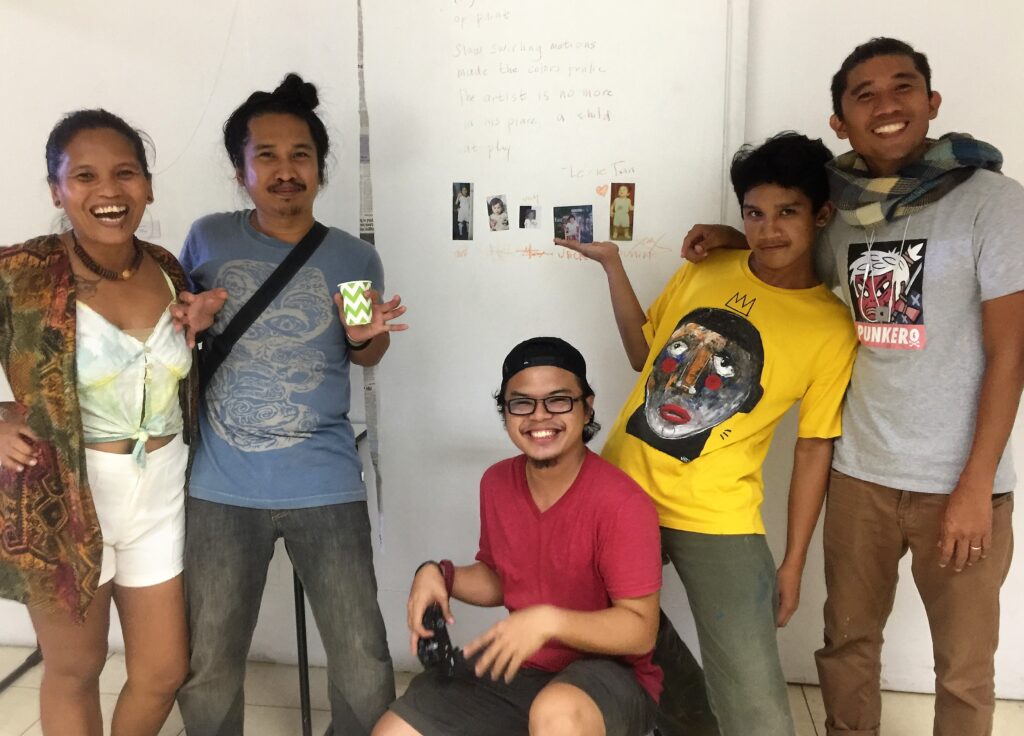
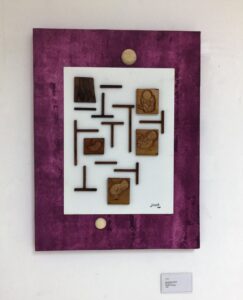
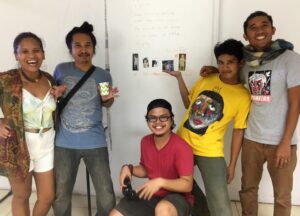
Kubyal presents a diverse range of media, including collage, mixed media, acrylic on canvas, oil on canvas, installations, and murals. The works interpret childhood memories and playtime experiences through the perspectives of artists Kristine Buenavista, Marrz Capanang, Jonn Laserna, Jecko Magallon, and wood sculptor Jounin Sumile.
The toys exhibited at the table were works by Agustin Batiller, a friend by the artists whom they fondly call by his nickname, Tikô. His pieces, Tarak-tarak, Tulutelepono, Pitiw, and Tirador, among other toys once popular with children brought viewers down memory lane.
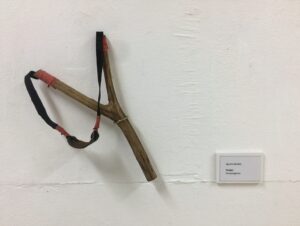

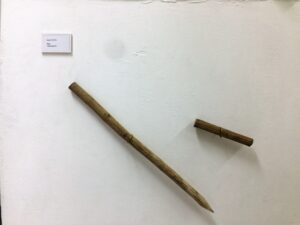
The toys at the gallery were not the kind one would encounter in toy stores at the mall. Instead, they were playthings manually assembled from discarded or used materials, brought together through human imagination, creativity, and skill. The result was functional toys that are seldom seen today.
The toys could be considered “old school,” yet viewers could easily relate to the materials. They stirred childhood memories with nostalgia and celebrated human ingenuity with delight—especially among adults who once created toys from found objects, cans, ropes, and old slippers.
Play enriches imagination and cultivates creativity
The word kubyál reminds viewers of their parents’ voices from childhood. The term kubyál (also rendered as hubyal or húblag) was often heard from mothers calling their children home after a day of playing in the neighborhood, saying, “Tama na nga hubyal, pauli na!”—meaning, enough of the frolicking; come home now.
Hence, kubyál typically described children who were active and energetic at play and who came home at dusk sweaty, dusty, and smelling of the outdoors. These moments underline the integral role of play in the cognitive and emotional development of children.
“Natural, unadulterated play is important for children,” shared Jorvelyn Jaruda-Espinosa, “because it fosters their imagination to create something beyond the items they hold as toys.”
Espinosa, who was the founder and director of Maya Play Garden and Daycare Center (which has since ceased operations) demonstrated how the five senses can work together to shape the dynamics of imaginative play using a stick, a cloth, and a ring as toy materials.
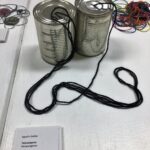

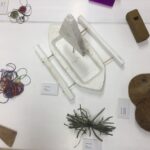
“Simple materials that are found from our surroundings are beneficial to children,” said Espinosa as she offered distinction of the difference between ‘open-ended’ and ‘closed-ended’ toys.
“Closed-ended toys are the prevailing type among children these days—gadgets, electronics, and battery-operated devices. This, however, is passive play,” she stressed. “Open-ended toys, on the other hand, may be simple items, yet they can stir children’s imagination and allow them to expand possibilities; hence, they encourage active play.”
“Open-ended toys,” she added, “are interactive and engaging. These elements are important when children play because they use many of their senses.”
Espinosa reminded viewers of the exhibit that “passive play creates many problems among children, such as underdeveloped motor skills, difficulty interacting or socializing with others, and obesity, among other health concerns.”
The healing power of art and play
Two of the artists, Kristine Buenavista and Jounin Sumile, shared how art, play, and interaction with friends helped them overcome panic attacks brought on by an anxiety disorder.
The works they exhibited hinted at traces of their struggles with the mental demons brought on by depression. They illustrated how art and play served as significant avenues in their lives, liberating them from dark periods.
For Buenavista, her work served as a reminder of the years she spent with her five younger siblings, enjoying play, domestic chores, and moments of bonding.
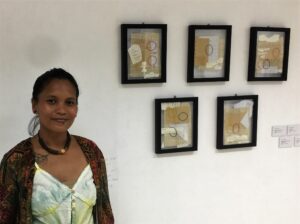
“As the eldest among the children, I cared for my younger siblings, and we shared many kubyal moments,” she expressed. “Mind you, those playful moments sustained me during my struggle with anxiety disorder.”
“It was the child in me that allowed me to thrive and survive,” Buenavista recalled with relief.
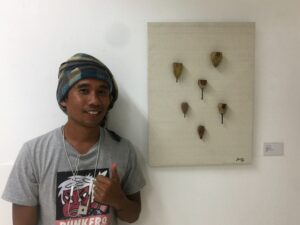
Jounin Sumile, on the other hand, shared that his works served as a footnote on how anxiety gripped his life to a halt after it manifested through severe panic attacks. “I was literally confined at home for close to 3 years and it was my friends and passion for art that facilitated my healing from the disorder,” he recalled.
“I stopped art making when I reached high school for I have to attend to new priorities,” intoned Sumile, “but it was my friends from the art community who encouraged me to go back to art making.”
Honed by competitions that he has joined since a young elementary student, Sumile has excelled in art and he is a recognized wood sculptor. The healing power of art and play allowed Sumile to regain control of his life and sooner reclaimed his command on his art.
Childhood play influencing art
Bringing up the childlike spirit to the exhibit is Jecko Magallon. His collage and mural work typified playfulness exemplified by bright shades to highlight characters and vibrant hues to render joyous shapes.
“My work is about the play and I am fond of on-the-spot painting because it is moving, messy, and I like the idea of a work in progress,” said Magallon.
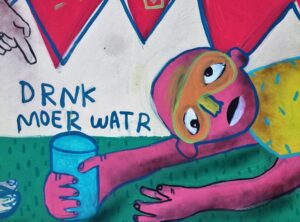
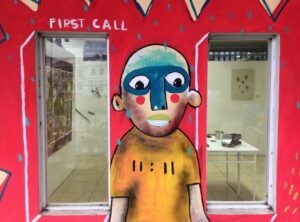

“My mother believed that I have ADHD (attention deficit hyperactivity disorder) as a boy, but I later found out that my character is similar to what “indigo children” are described.
Indigo children are children who have special and unusual abilities, if not supernatural.
Moreover, sharing a strong connection to childhood play, Jonn Laserna’s work showed memory of collective play during fiesta season at the community. “These events bring a lot of playmates to the community and the experience is something that you carry later on even when you play alone by your lonesome,” said Laserna.
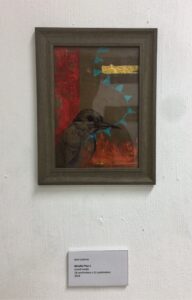
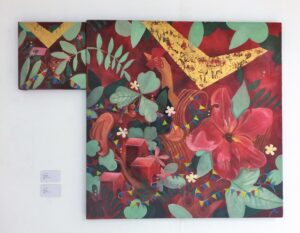
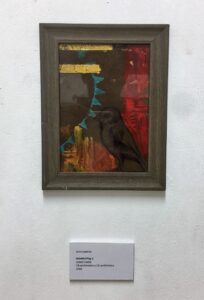
“My work imparts a character of a child,” explained Laserna, and “it is demonstrated my childhood wherein I wake up in the morning and I go out to play with friends at the neighborhood unmindful of obligations or responsibilities.”
Another artist whose works are usually emblematic of his conscious connection with nature, Marrz Capanang’s installation work Hulurma used sand from the shoreline of the beach where he grew up.
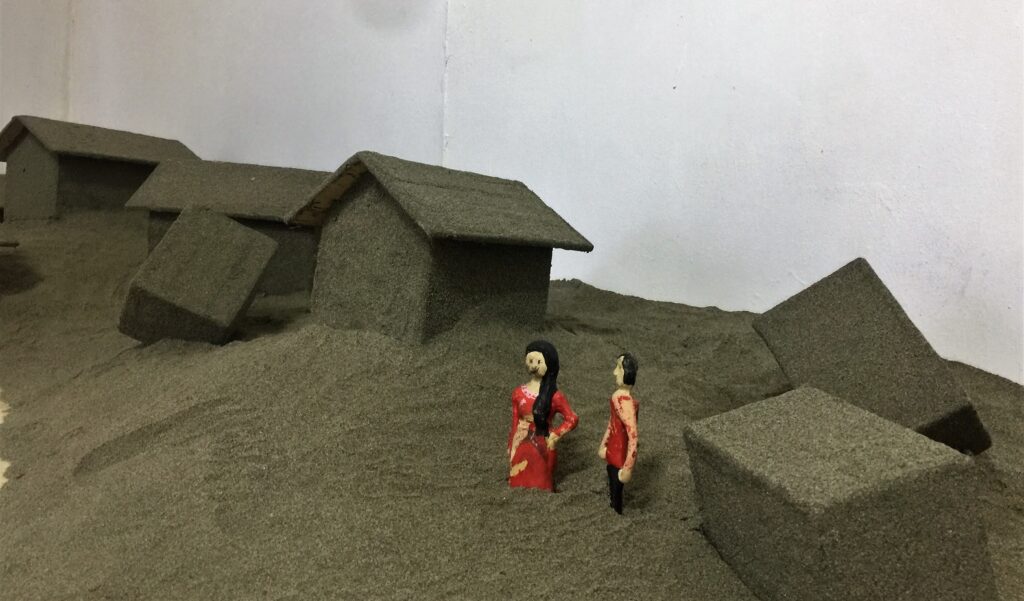
“The sand has a string connection on my childhood and playtime moments for I used it to shape figures like houses and communities with it,” he said.
The concept of Kubyal, Capanang explained, “is grounded from our (the artists) experiences and learnings as children at play. At this age and time, our coming together were simply like playmates where the play is at the center of the activity.”
Kubyal is forthright and straightforward. Its message offers a timely reminder of how children’s play has evolved over the years. The exhibition encourages reflection on how money has influenced childhood, with toys often serving more as status symbols that reflect economic hierarchy rather than as objects that nurture imagination and creativity.