Kikik Kollektive’s Ipaambit and The Tapestry of Becoming
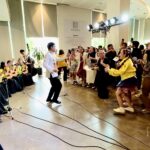
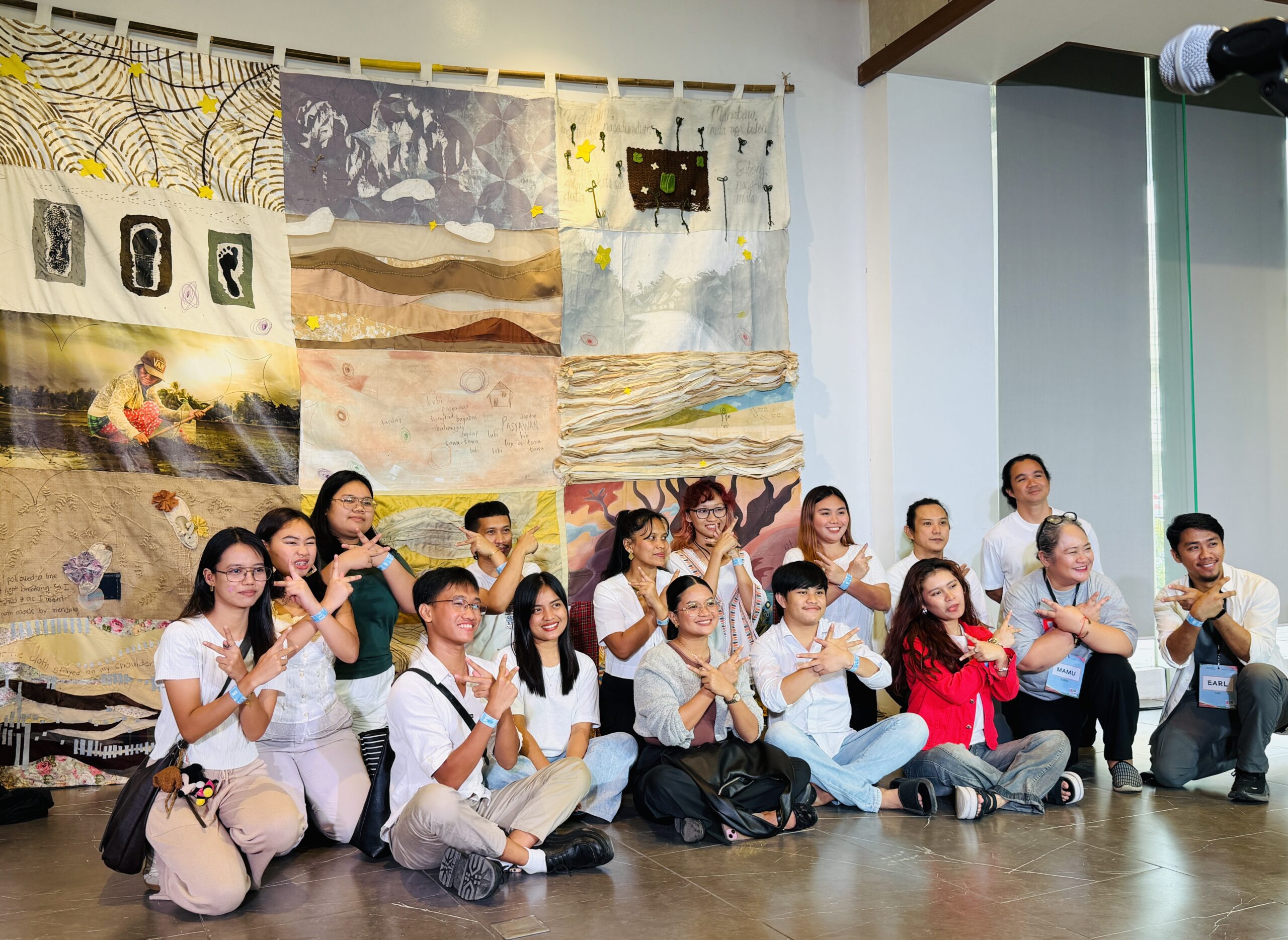
Kikik Kollektive opened this year’s Iloilo Edition of Palabas, the performance program of the Cultural Center of the Philippines’ Pasinaya Open House Festival, at the Iloilo Museum of Contemporary Art with Ipaambit (to share). The work unfolded as a dual presentation, comprising both a performance and an installation, each resonating in dialogue with the other.
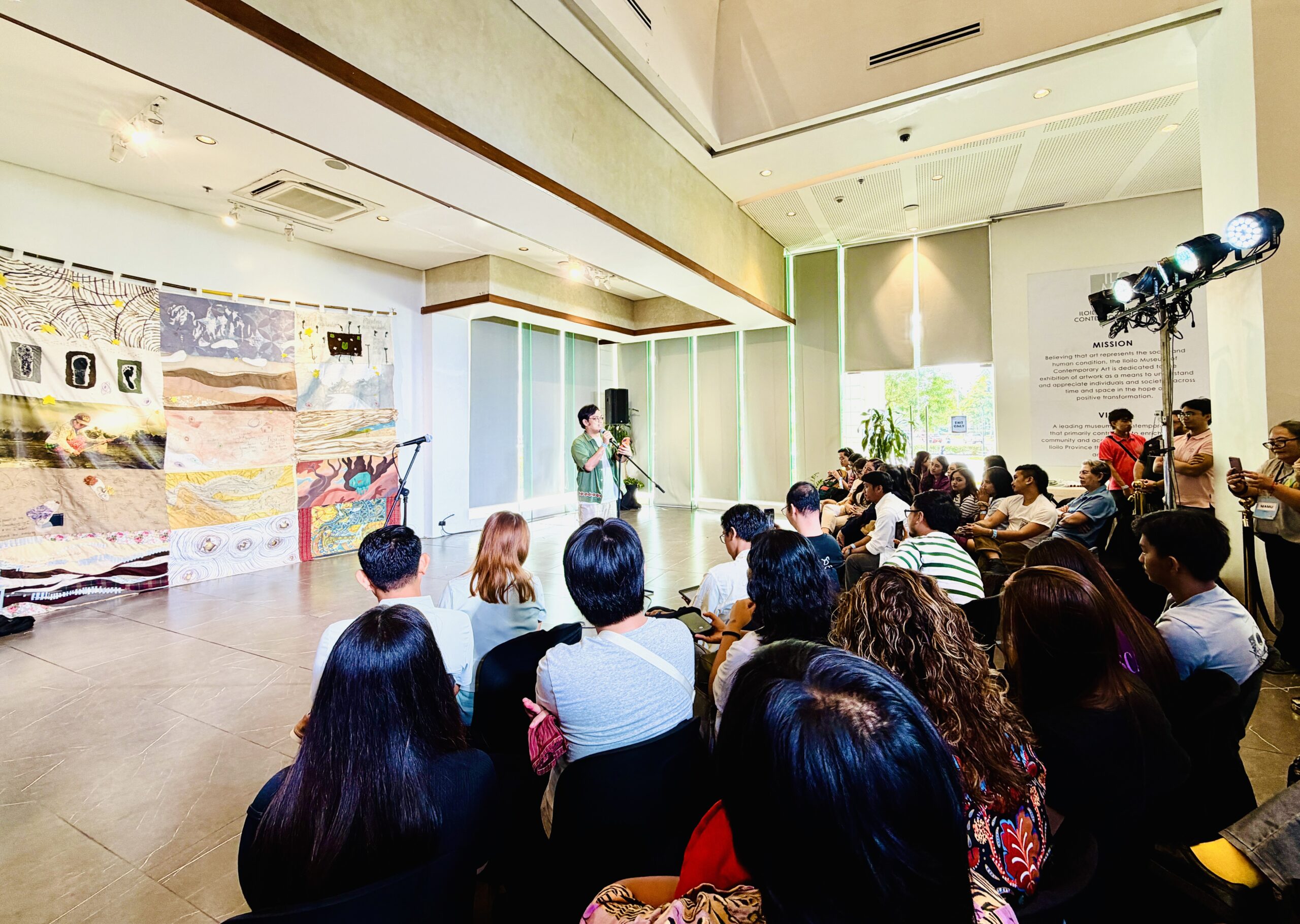
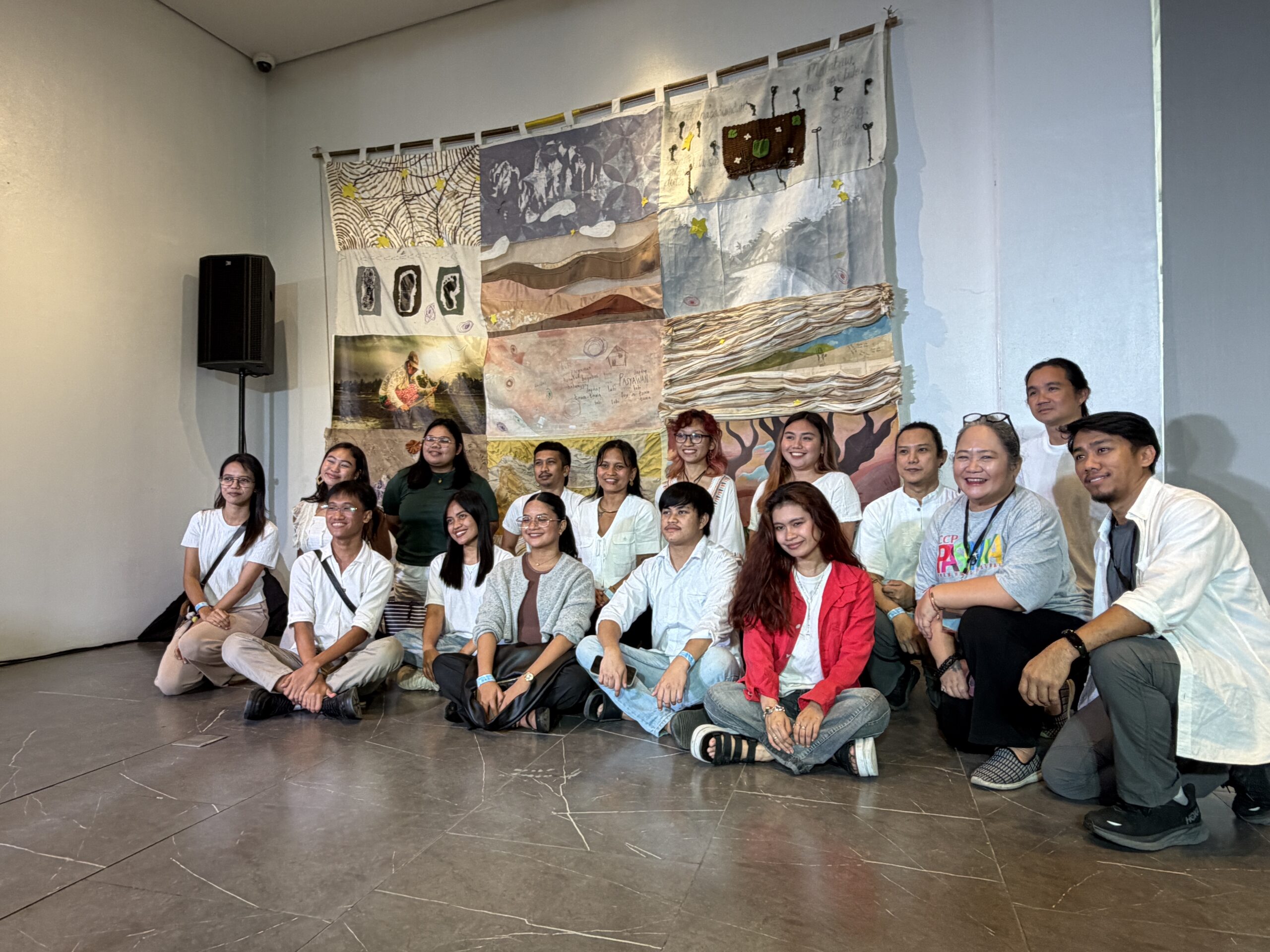
I sorely missed the performance itself, yet the textile mural hanging prominently on the museum wall, serving as the backdrop for the performances on the ground floor immediately drew my attention. I recognized it at once as a likha (creation) of Kikik Kollektive for it shows the ritual of making that is so central to their practice, a method I have come to witness in their previous works.
There is something unmistakable about the way they create: an artwork is never made alone, but through a shared, immersive act in which ideas, concepts, materials, execution, and space converge into a cohesive whole.
Standing before the mural evokes a layered sense of movement. It exudes the energy of its creation—the voices and laughter, the musings and lighthearted teasing, the conversations, and the care for detail woven into every stitch. Each 2 × 4 panel quietly traces an individual artist’s musings, experience, memory, hopes, and longings.
Hand-stitched together, the 15 individual pieces form a singular patchwork mural that conveys the experience of the present through subtle hues of resistance to a corruption-marred political condition and the awkwardness of creation within the capitalist system, while hinting at collective aspirations, vividly unified as “the tapestry of becoming.”
Paglikha sa Kinabukasan
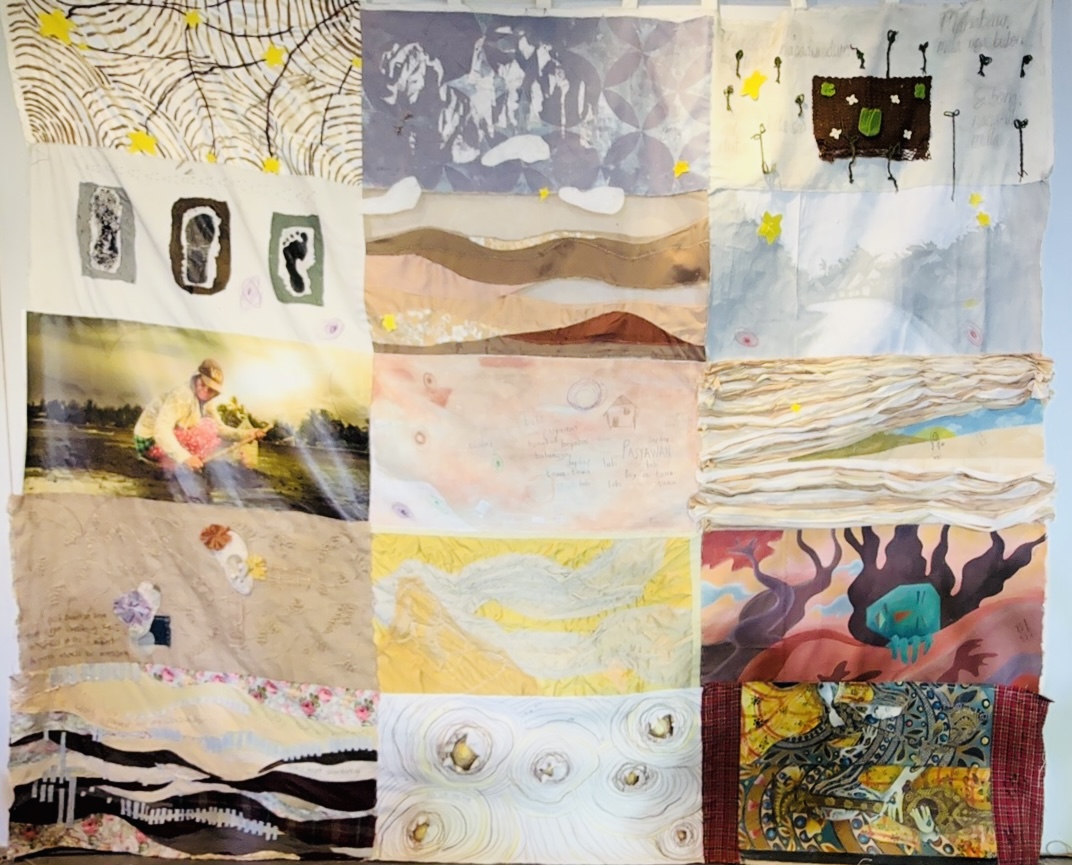
Conceptualized and designed by Kristine V. Buenavista, with creative direction and concept by Marrz Capanang, the work is a meditation on making the future—paglikha which is understood in the vernacular as paghimo or pagdihon (also hinimuan or gindihon in Hiligaynon) as a collective, living act.
Paghimo reminds us that the future is grown and nurtured; not given, not even inherited.
Through shared making, care, and connection to one another, and to iloy-duta (mother earth), we cultivate a future rooted in creativity with discernment, memory, and responsibility.
Tapestry of Becoming
The Tapestry of Becoming reinforces the truth that the future is not waiting ahead of us; it is something we must shape—by hand, together—because creation, the ritual of making, is never a solitary act. Many hands move together across generations, repeating gestures and learnings over time, forming and linking what Kikik Kollektive describes as an “umbilical cord” that binds imagination to the earth and connects us as kin, companions, and co-creators.
Human history and development attest to our communal roots, with daily life shaped by human hands—from preserving life and planting and harvesting, to food preparation, cooking, eating, and even the expression of affection.
The future revealed through this process feels immediate and tangible, not distant or abstract, and not defined by technology or Artificial Intelligence. It is continuously woven from memory, nurtured through care, and carried forward through shared labor.
Also Read: Kikik Kollektive Makes a Stand at Art for Everyone 2025
The Tapestry of Becoming thus serves as a cautionary metaphor. It warns against the lure of hollowed intentions disguised as progress, and against promises of globalization with new technology cloaked in greed, enabling disconnection from one’s roots and from each other, driving wealth accumulation into the hands of the few.
Instead, it calls viewers to remain anchored in paghimo/pagdihon kag sa pagpakig-upod — through togetherness and to return to and exercise our innate capacity to create collectively, where making, sharing, and belonging are not mere actions, but essential practices through which the future is nurtured, remembered, and sustained.
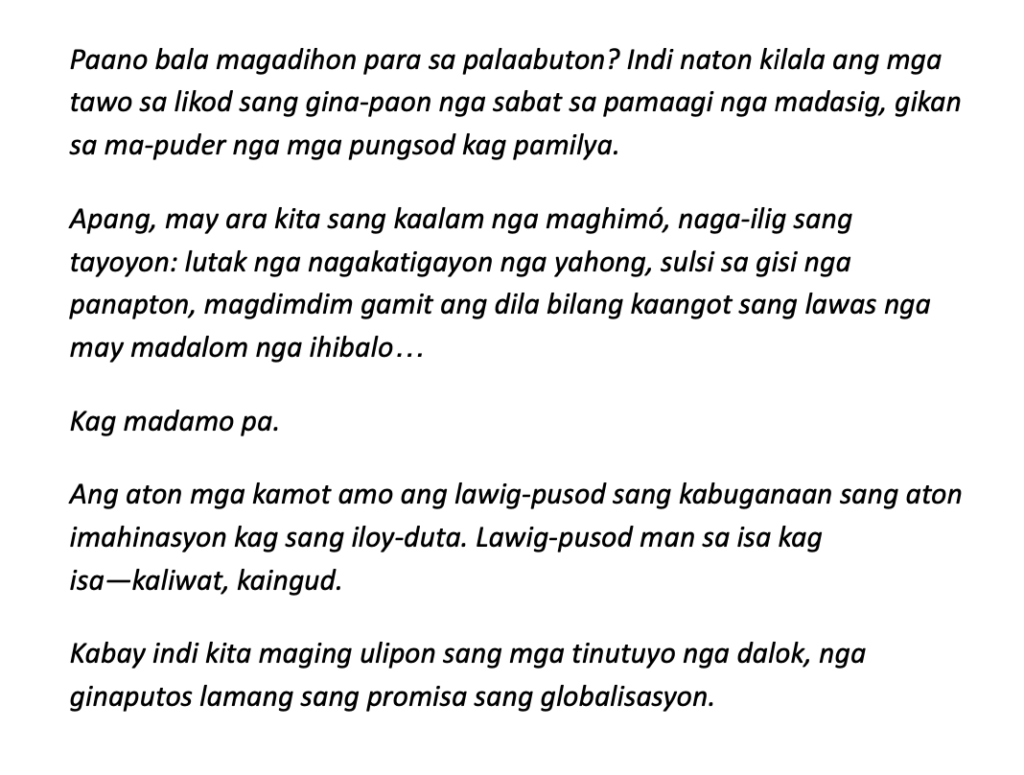
And so we return to the fundamental question, “paano bala magadihon para sa palaabuton?” with an answer: Sa pagpadayon sang paghimó, sa pagpakigbahin, kag sa pag-atipan sang palaabuton paagi sang nagahugpong nga kamot, lawas, kag hunahuna sang tanan.