Guy Custodio Paintings on view at Taohay NCCA Hulot Taliambong
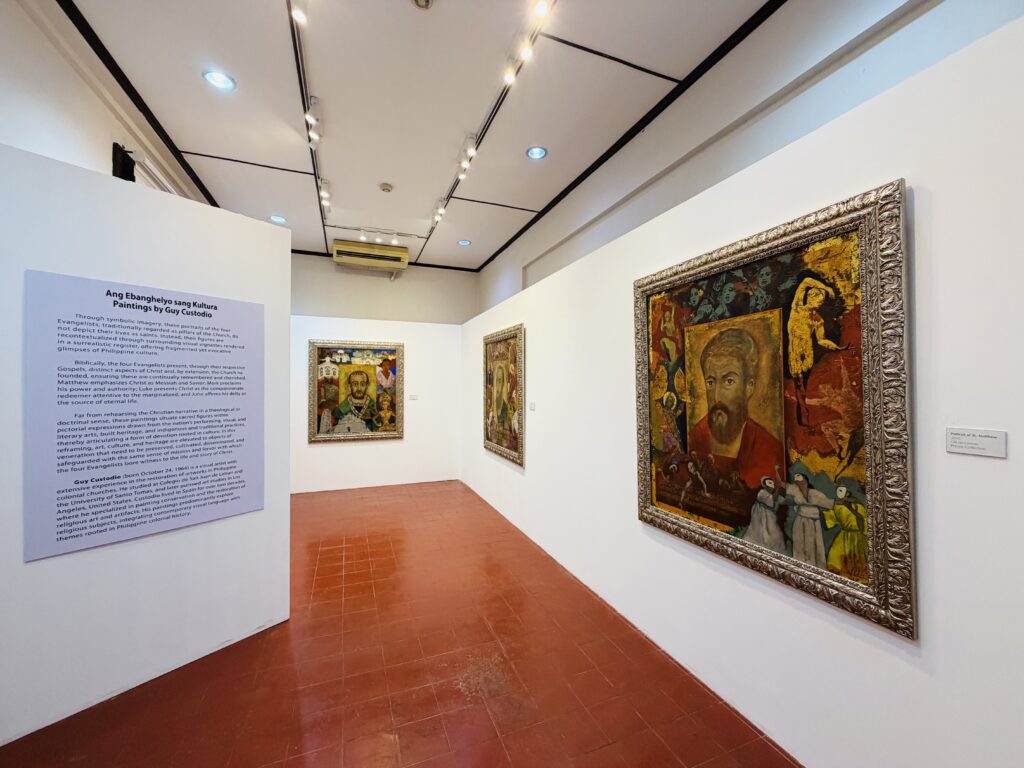
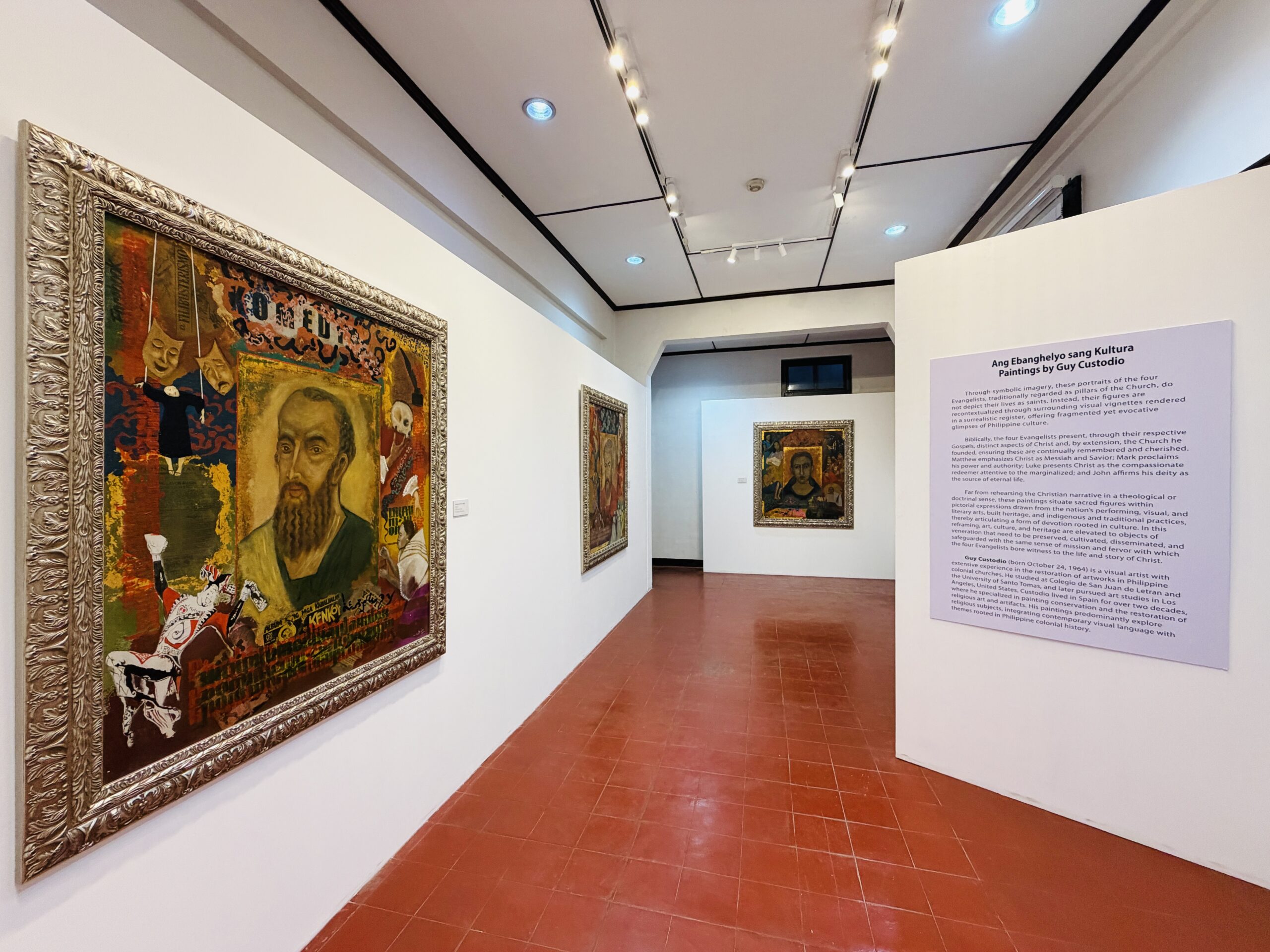
In the world of Filipino contemporary art, Guy Custodio paintings stand out for their unique fusion of cultural narrative and religious art heritage. Currently featured at Hulot Taliambong at the ground floor of Taohay NCCA Cultural Center and Regional Hub in Jaro, Iloilo City.
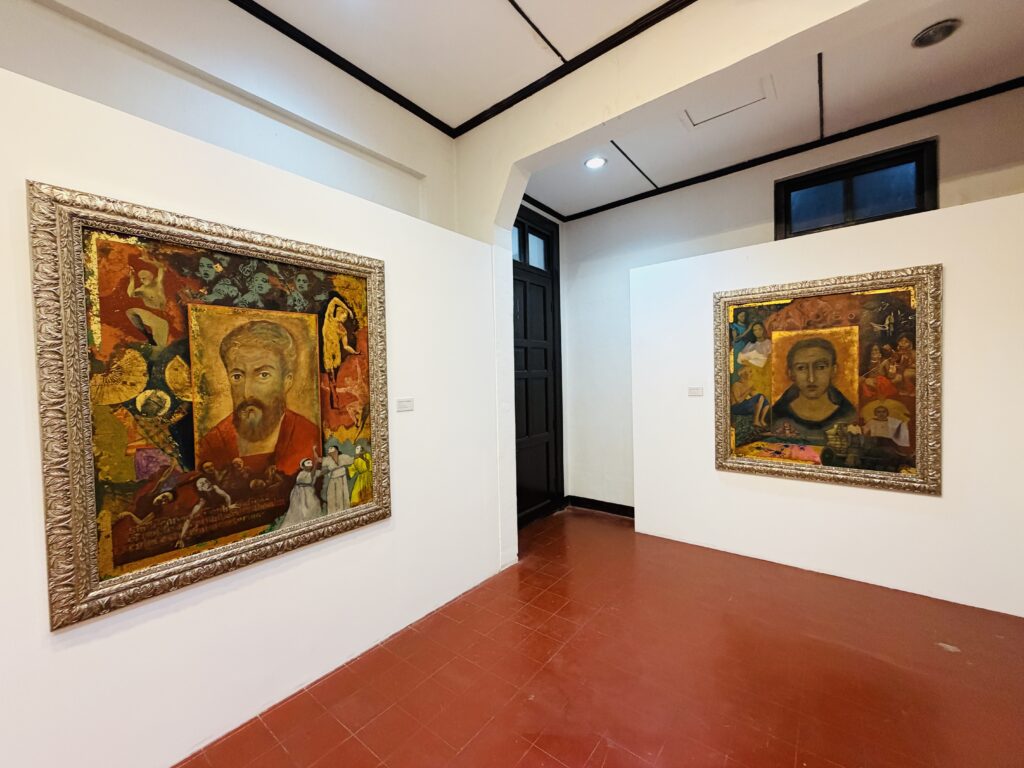
The works reflect the artistic vision of Filipino painter and conservator Guy Custodio, whose career has been deeply shaped by his background in preserving sacred imagery. His training as a conservator of religious art informs the symbolic depth of his paintings, where tradition, spirituality, and Filipino identity converge in visually compelling narratives.
Born on October 24, 1964, Custodio pursued his early education at Colegio de San Juan de Letran and later studied at University of Santo Tomas. He eventually continued his art studies in Los Angeles, United States, where he further developed his artistic practice while strengthening his expertise in art conservation. These formative experiences helped shape the distinctive visual language evident in Guy Custodio paintings, where cultural heritage and religious symbolism are thoughtfully reinterpreted through a contemporary Filipino lens.
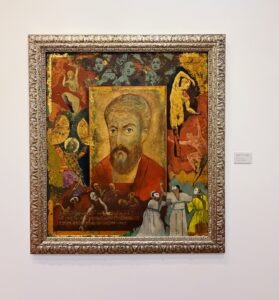
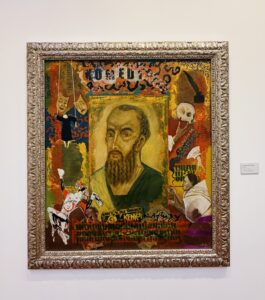
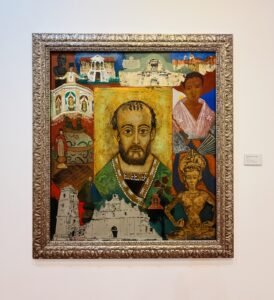
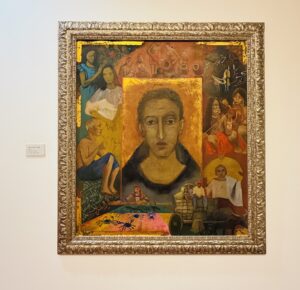
Guy Custodio’s paintings in Ang Ebanghelyo sang Kultura offer Ilonggo audiences and art followers a rare glimpse into sacred iconography viewed through a distinctly cultural lens. The works resonate strongly within the community’s religious milieu, particularly in Jaro, where the Jaro Cathedral and the nearby Archbishop’s Residence of Jaro stand prominently beside the plaza—an area long surrounded by families with deep-rooted ties to the Catholic Church.
Read: TAOHAY Regional Cultural Hub: Breathing New Life into Iloilo’s Beloved Landmark
The series presents portraits of the four Evangelists—Matthew, Mark, Luke and John—long regarded as pillars of the Christian Church. Rather than depicting them through conventional hagiographic imagery, Custodio situates these figures within surreal visual fields populated by symbolic vignettes that evoke fragments of Philippine culture.
The paintings move away from literal representations of the Evangelists’ lives as saints. Instead, their presence anchors a constellation of motifs drawn from the country’s performing, visual, and literary arts, alongside references to its built heritage and indigenous traditions. Rendered in a dreamlike register, these elements function as cultural signifiers, suggesting that the nation’s artistic and historical expressions serve as repositories of meaning and collective memory.
Through this approach, Custodio’s paintings unfold like visual sermons, inviting viewers to reflect on faith, heritage, and the enduring narratives embedded in Philippine culture.
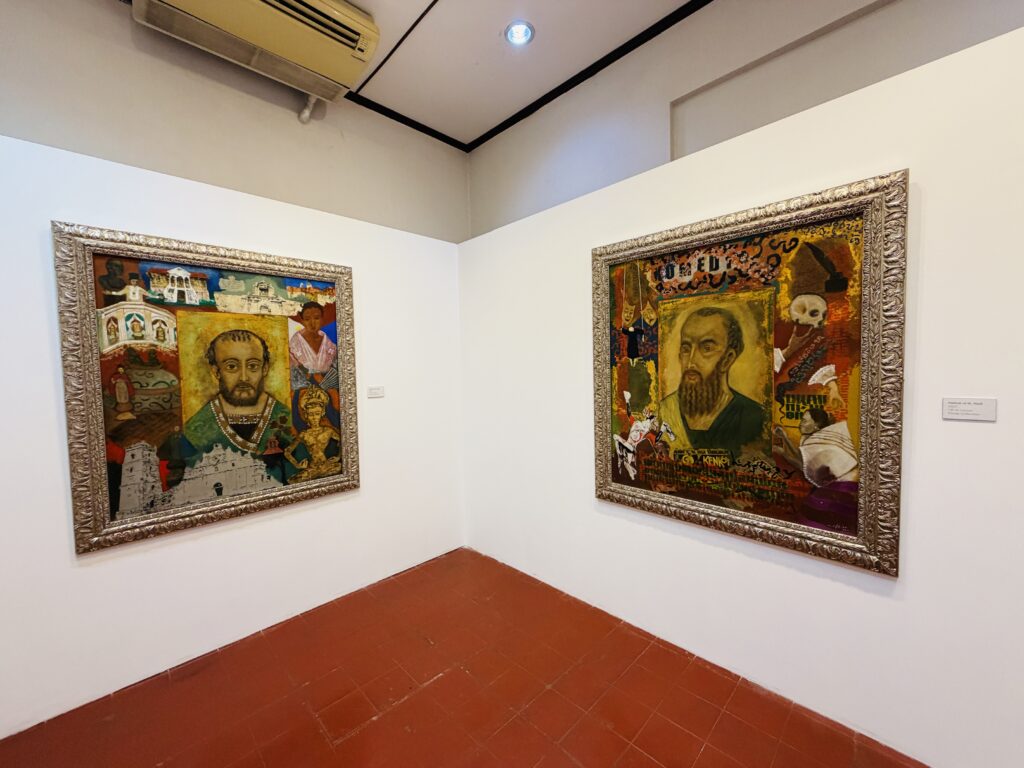
Biblically, the four Evangelists are remembered for articulating distinct theological portraits of Christ through their respective Gospels. Matthew emphasizes Christ as the Messiah and Savior; Mark foregrounds his power and authority; Luke presents a compassionate redeemer attentive to the marginalized; and John proclaims his divine nature as the source of eternal life. Together, their writings form the narrative foundation of Christian belief and devotion.
Custodio’s paintings do not attempt to retell these theological narratives directly. Instead, they transpose sacred figures into a broader cultural landscape. Within this framework, the Evangelists become symbolic witnesses not only to faith but also to the vitality of Philippine culture. The surrounding imagery—suggestive of artistic traditions, rituals, and historical memory—transforms the canvas into a layered meditation on heritage.
Through this reframing, the works propose a parallel between religious witness and cultural stewardship. Art, culture, and heritage emerge as objects of reverence—treasures that demand preservation, cultivation, and transmission. In Custodio’s vision, the fervor with which the Evangelists proclaimed the life of Christ finds resonance in the responsibility to safeguard the nation’s cultural legacy.
Custodio also spent more than two decades in Spain, where he specialized in painting conservation and the restoration of religious artworks and artifacts, informing the sensibility of his practice, integrating a contemporary visual language shaped by the historical intersections of faith, art, and Philippine colonial experience.
In Ang Ebanghelyo sang Kultura, these elements converge—presenting a body of work that frames cultural memory itself as a form of devotion.